Woven Radical
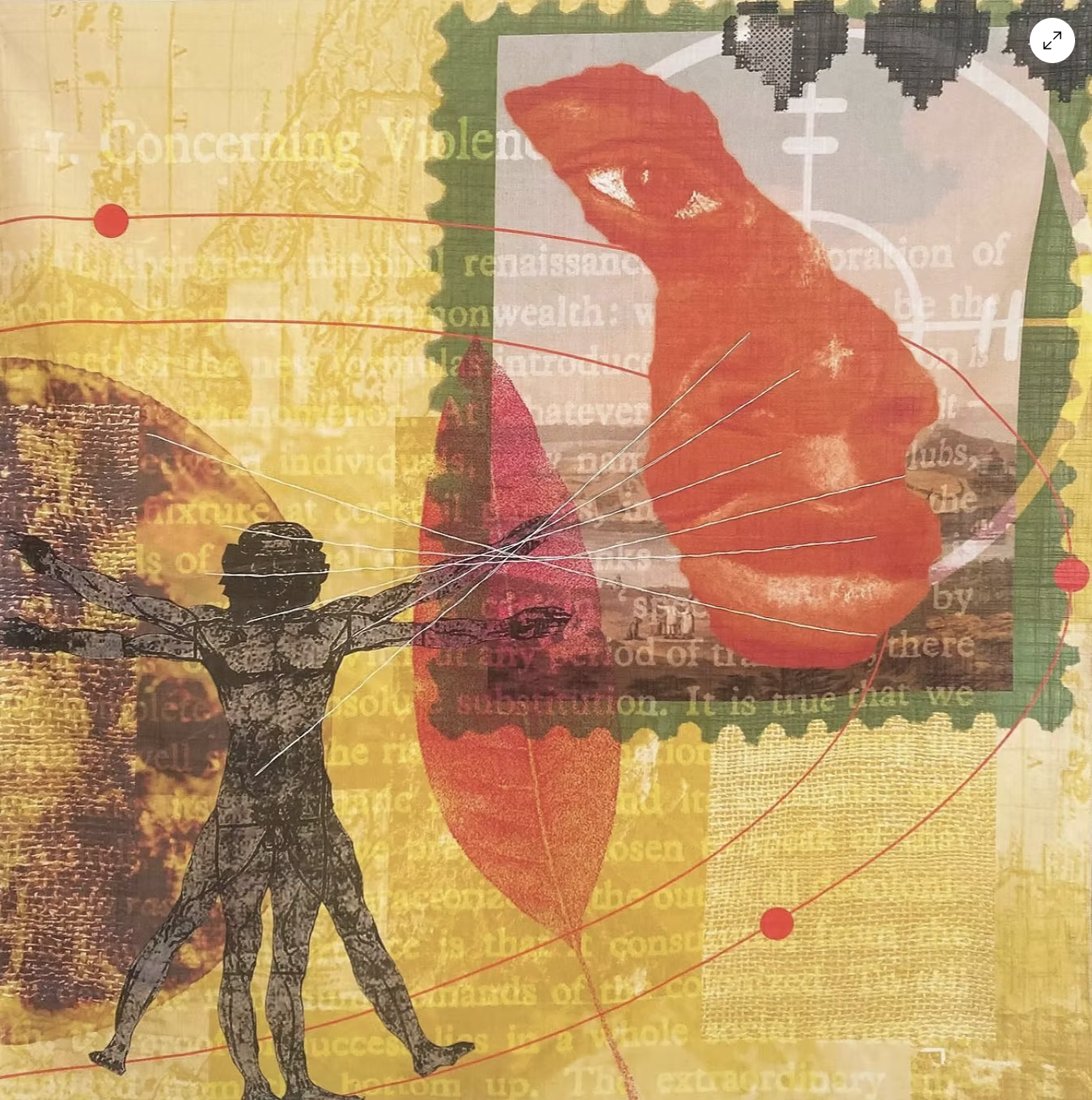
“But there's something about communicating in a creative way that makes it a lot more accessible, and it can reach audiences that you might not even be in contact with yet, but your art reaches there,” the self proclaimed multifaceted, multi-fascinated artist tells me over Zoom.
For many, stories simply fade away and interactions with strangers are lost to memory. Yet for artists like Hannah Ashleigh Smit, these are the essence of an artistic practice centred on the world around us.
Hannah’s artworks are ones of interwoven stories and experiences. Drawing on the world around her for inspiration, through conversations or Substack articles or simply the fabric she finds on her day to day adventures, Hannah creates from a perspective of observation. Digging deeper, this perspective is prevalent in her literary interests too. Political theory is a foundational area of inspiration for Hannah and is visible across her artistic practice. When curating and creating for her most recent solo exhibition, We Will Not Come In Peace, the influences of both Fanon’s Wretched of the Earth and Freire’s Pedagogy of the Oppressed were integral. Using both works as inspiration led Hannah to create Afrosurrealist narratives about systemic marginalisation and the afterlives of Western colonialism and imperialism. As a Caribbean woman in the UK herself, Hannah explored systems of dehumanisation within healthcare and educational spaces by drawing on the personal testimonies of people in these groups. By interweaving elements of the personal and public, Hannah’s artwork consists of layers of rich inspiration.
This practice of layering is also evident in her initial process of creation. With “3 or 4 ideas oscillating in her mind at all times” jotted down in a book of her thoughts, Hannah is able to nurture and grow her ideas into fruition. Looking at her digital collage pieces is a clear manifestation of the work down behind closed doors. Each aspect complements the next in an act of homage for the multitude of artists that inspire her the most; non exhaustively including the likes of Faith Ringgold and Lubaina Himid. The depth of these layers go even further through her explorations of archival imagery, bringing her even closer to her culture as a native Caribbean.
In some areas, Hannah’s artistic practice can be uniquely raw and intimate. Specifically, she says, in the early stages of creation. In wanting to know why she may not share some pieces, Hannah revealed that the intimate nature of her poetry and prose has remained with her after the creation of a final piece. But in Hannah’s words, “I think writing really informed my practice, and I'm getting to a point where I want to show more of it.”
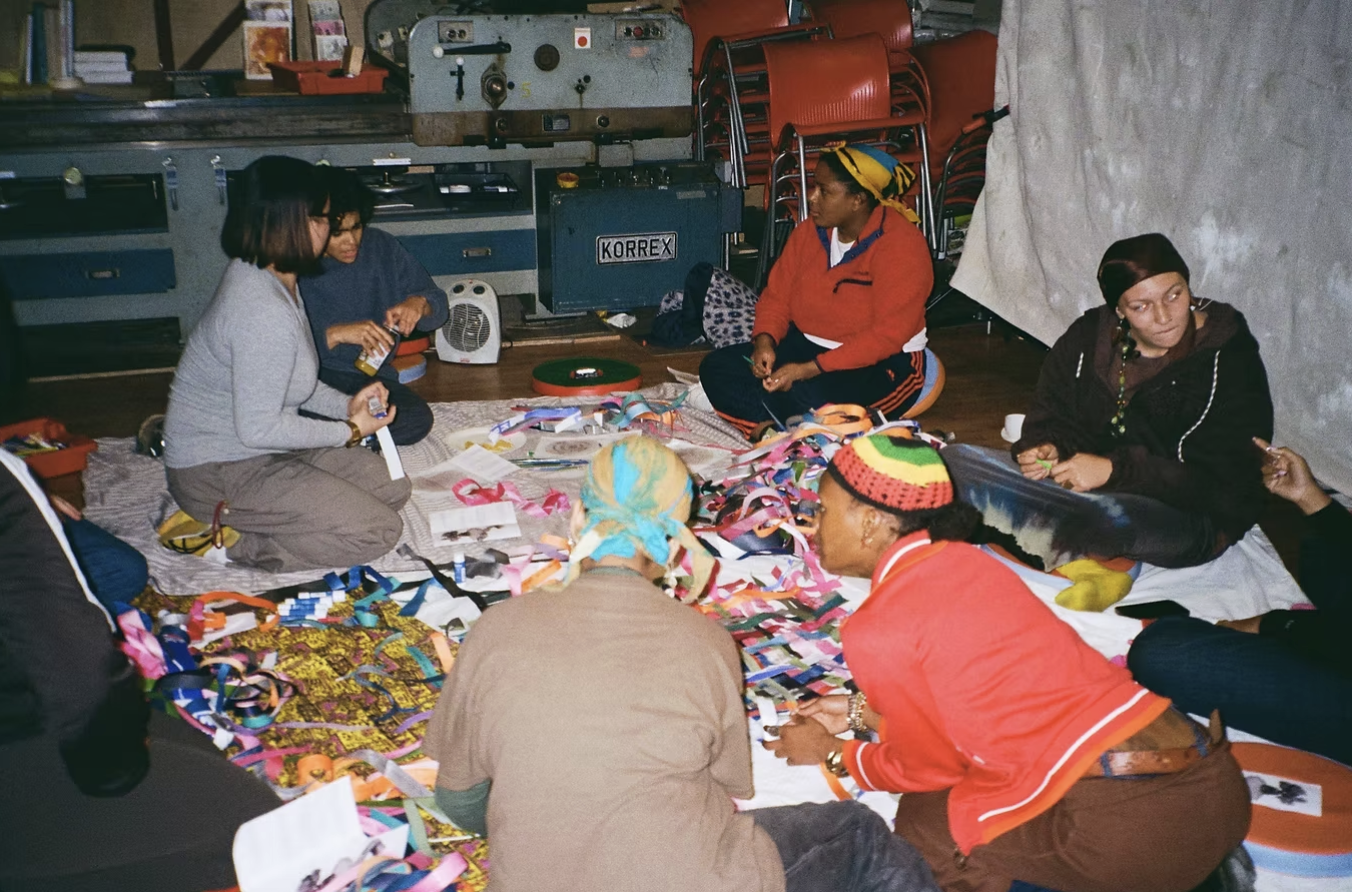
“WEave Workshop", Photo by Lucien Topolsk, December 2024